The Solar System at a Glance
Eight planets, one star and billions of smaller bodies: a short tour of our cosmic neighbourhood.
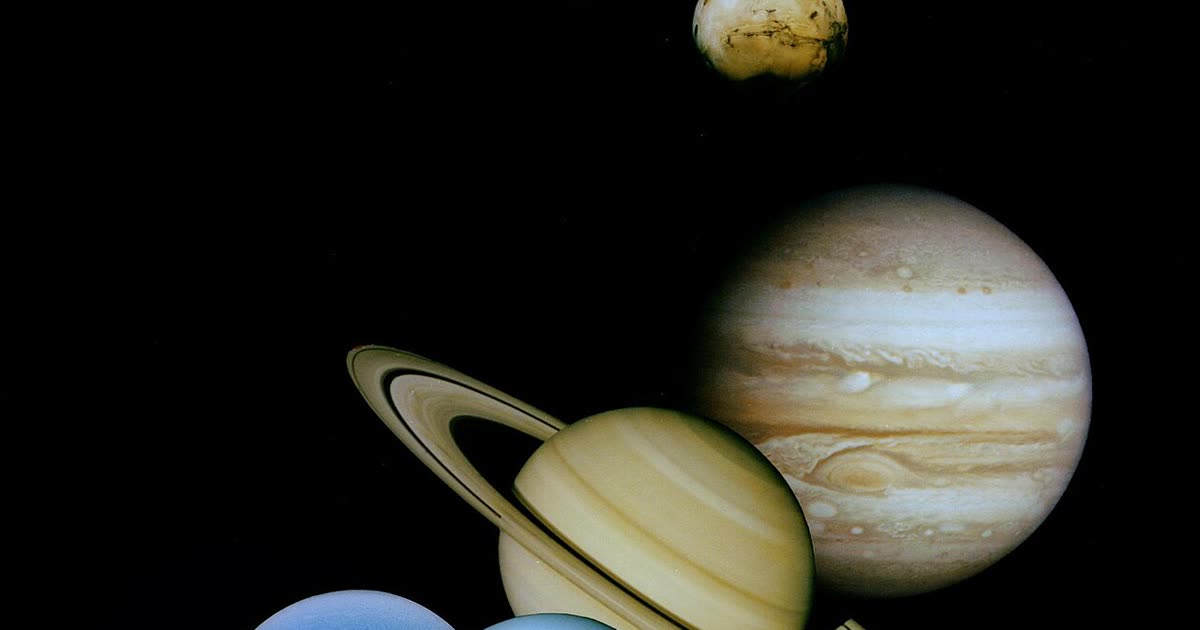
The Solar System formed about 4.6 billion years ago from a collapsing cloud of gas and dust. At its centre sits the Sun, which holds more than 99 percent of the system's total mass and supplies the light and heat that make life on Earth possible.
Four small, rocky planets orbit closest to the Sun: Mercury, Venus, Earth and Mars. Beyond them lies the asteroid belt, a region of rocky debris between the orbits of Mars and Jupiter. Further out are the giant planets: Jupiter and Saturn, made mostly of hydrogen and helium, and Uranus and Neptune, often called ice giants because they contain large amounts of water, ammonia and methane.
Past Neptune lies the Kuiper Belt, home to dwarf planets such as Pluto, and far beyond that the Oort Cloud, a vast shell of icy bodies thought to be the source of many long-period comets.
Distances in the Solar System are enormous. Light from the Sun reaches Earth in about eight minutes, but takes more than four hours to reach Neptune. That is why space probes need years, sometimes decades, to visit the outer planets.