Why Does Saturn Have Rings?
Saturn's rings are made of countless pieces of ice. Here is what they are and how we learned about them.
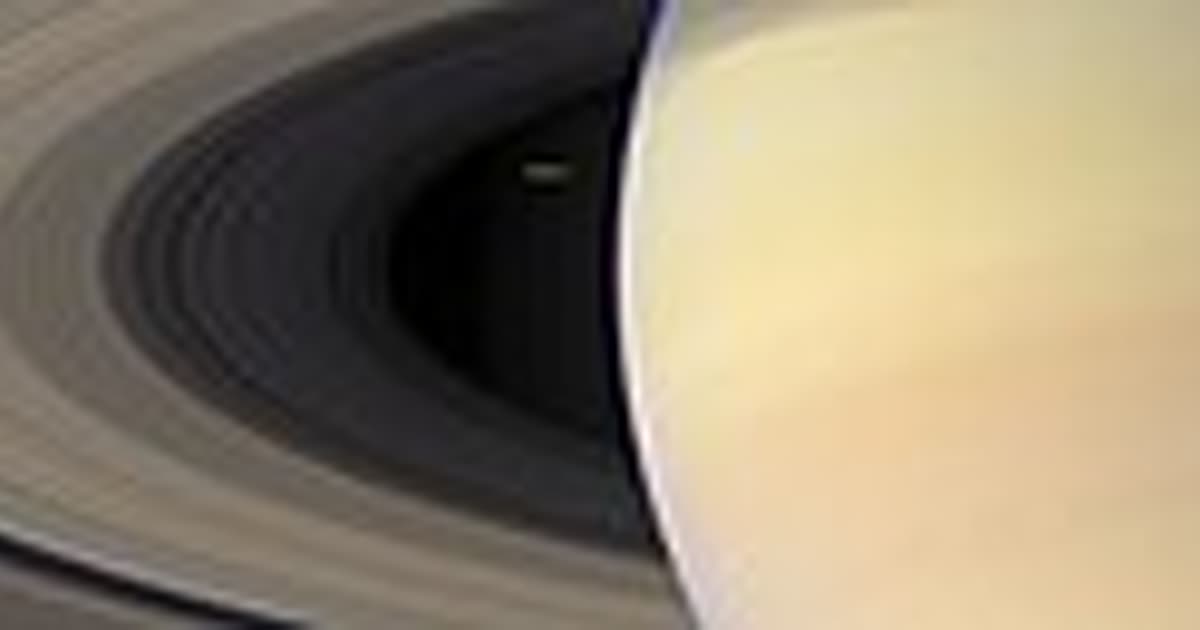
Saturn's rings are the most extensive ring system of any planet in the Solar System. They stretch hundreds of thousands of kilometres from the planet, yet in most places they are astonishingly thin, often only tens of metres thick.
The rings are not solid. They consist of countless particles of mostly water ice, ranging in size from tiny grains of dust to pieces as large as a house. Each particle orbits Saturn independently, and together they appear as broad, bright bands separated by gaps.
Galileo Galilei first saw something odd about Saturn in 1610 with an early telescope, but could not make out what it was. In 1655 the Dutch astronomer Christiaan Huygens correctly proposed that the planet is surrounded by a thin, flat ring. Later observations showed that the "ring" is really many rings.
NASA's Cassini spacecraft orbited Saturn from 2004 to 2017 and returned detailed images and measurements. Scientists still debate how old the rings are and how they formed, with leading ideas including the breakup of a moon or comet that strayed too close to Saturn.